
First Space
Some Kind Of Heaven
J Davies & Kyle Archie Knight
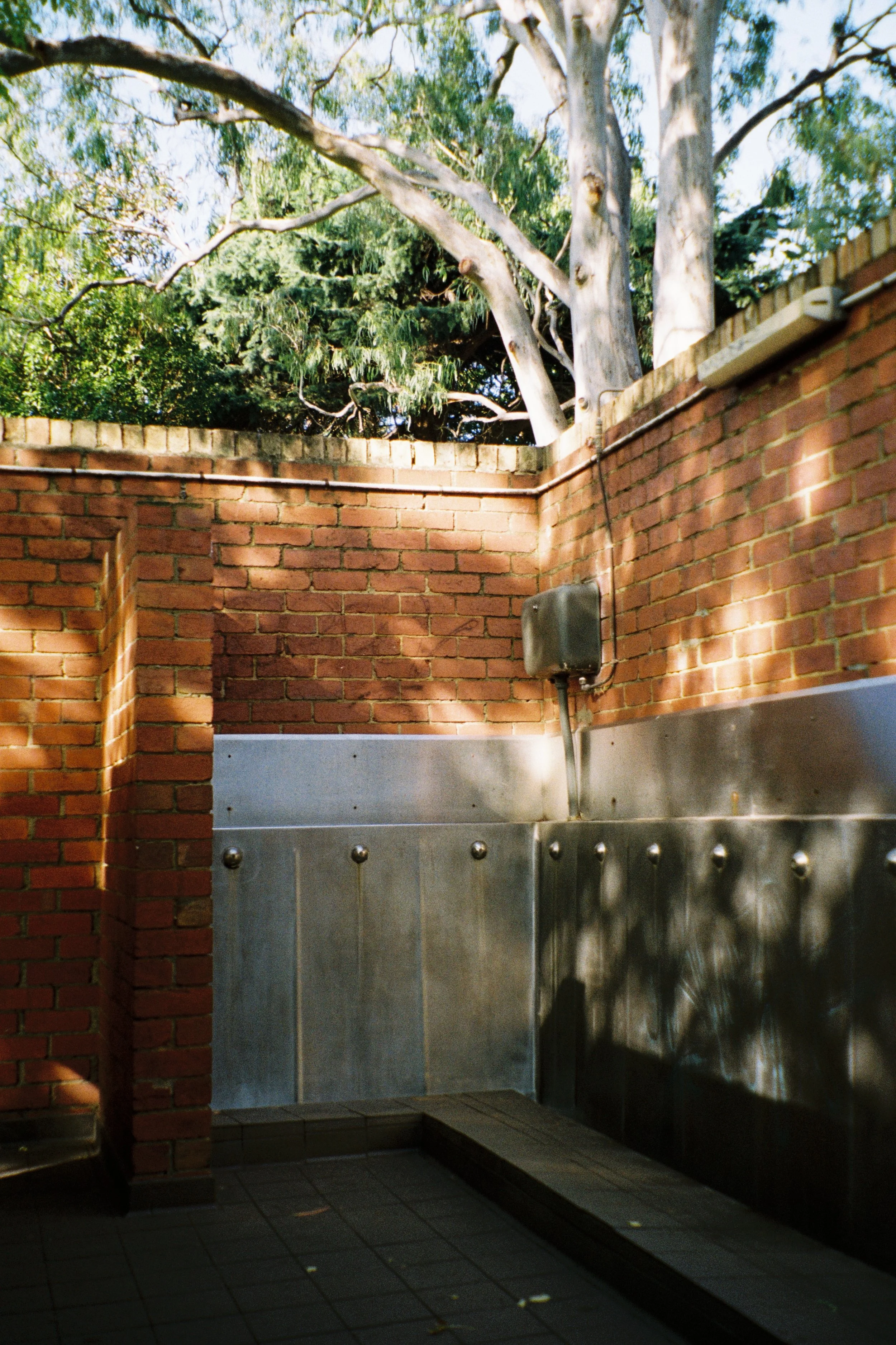
Some Kind of Heaven is a collaborative installation by J Davies (Ngāti Te Awhitu, Ngāti Hauā) and Kyle Archie Knight (Wiradjuri), created for First Space in the Sawtooth shed. Working together for the first time, the artists transform the corrugated structure into a tender, sensory environment that imagines a queer suburban-romance utopia from a First Nations (Aboriginal, Māori) perspective, on lands that were never ceded. Through photography, projection, sound, and text, the work traces gestures of intimacy and kinship that often remain unseen: sounds and silhouettes of chosen family and lovers, quiet domestic moments, and traces of queer presence in public space. This imagery forms an archive of closeness that resists erasure through softness, care, and attention. A layered suburban soundscape blurs public and private realms, inviting visitors to linger and listen. The installation becomes both home and dream, where memory, desire, and ancestry converge. Some Kind of Heaven asks what home can become when it is made together, and how care itself can be an act of resistance.
Bio:
J Davies is an Australian-born takatāpui (Māori, queer, agender) artist with whānau across Aotearoa and Australia. Growing up away from their whakapapa in Naarm has shaped a practice grounded in belonging, memory, and chosen family. Their photographic archive acts as a living record of connection, kinship, and care across time and distance.
Kyle Archie Knight is a Wiradjuri queer photographic artist and writer born and raised in the northern suburbs of Naarm (Melbourne). Family sits at the centre of his practice, shaped by collaborative and intimate photographic works made in response to grief following his grandfather Jimmy’s passing in 2017. His work explores queerness, identity, and notions of home through deeply personal relationships.
Inner Space
Ash in the Ancestral Mouth
Dean Ansell
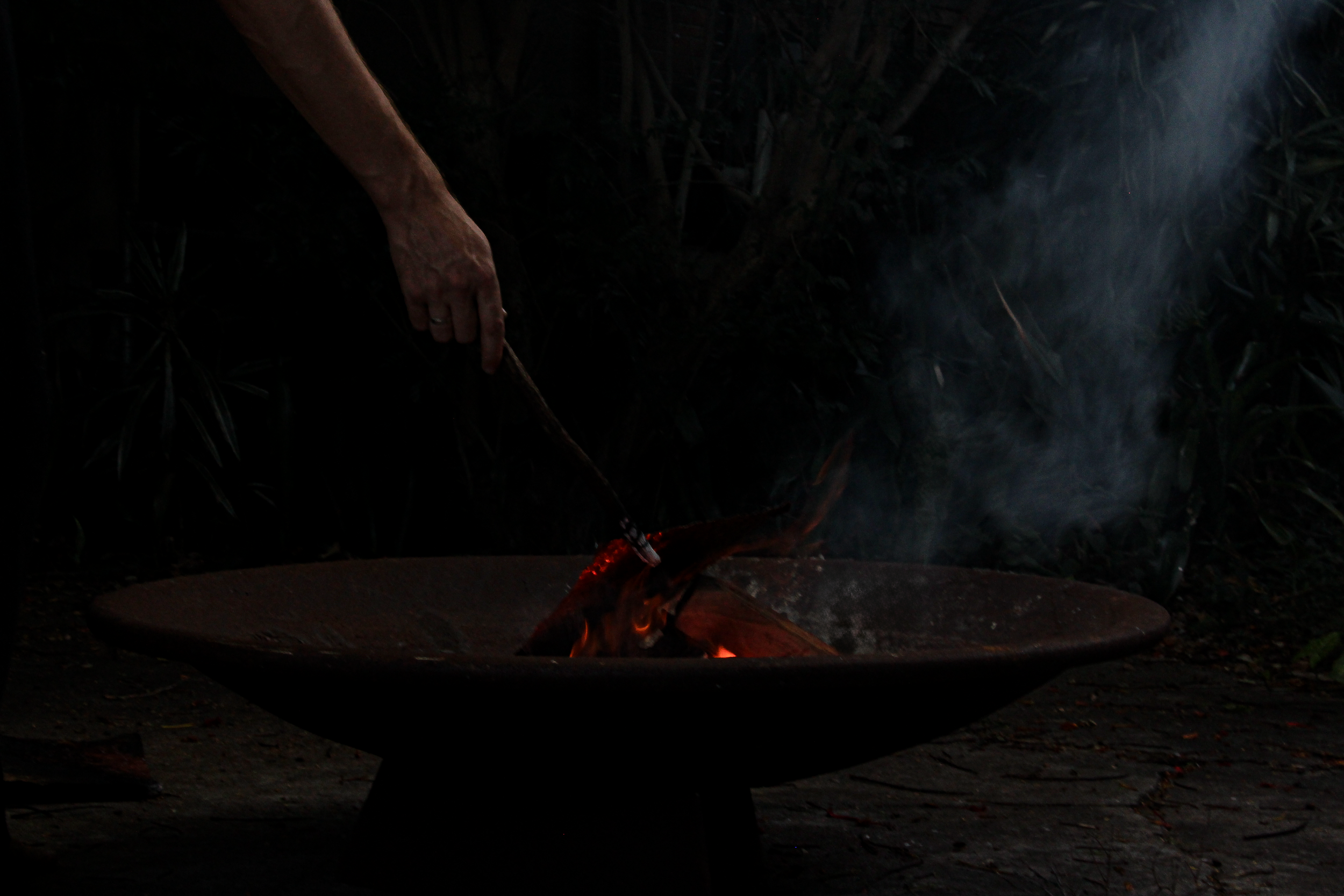
Ash in the Ancestral Mouth is an installation that translates the artist’s native language of Balawaian into physical vibration and material presence. A shallow vessel of water resonates with recorded speech, producing ripples that render language as movement; felt, unstable, and ephemeral. The water becomes a resonant surface where voice exceeds the mouth and enters the body of the space. Across the gallery floor, charred copper fragments pressed into boulder fissures near a creek form a darkened ground, carrying traces of heat, pressure, and displacement.
From Ansell’s diasporic position in Australia, the work acts as a portal, an attempt to communicate across distance and time with his ancestors. On opening night, Ansell will perform in Balawaian and English, foregrounding the tensions between inherited and colonial languages. The performance extends the installation as an act of calling, toward ancestors in Papua Niugini and toward language as something lived, fractured, and continually becoming.
Bio: Dean Ansell (b. 1997, he/they) is a multidisciplinary artist of Melanesian (Riḡorabana, Balawaia, Papua Niugini), Maltese, and Anglo-Celtic descent, based in Magandjin, Australia. His practice connects cultural heritage to material processes that engage his body and the environment. Working across installation, soundscape, and embodied performance, Ansell interprets Melanesian mythologies and ritual practices through a contemporary diasporic lens. By correlating inherited knowledge with personal experiences of cultural displacement, his work expresses the layered complexities of Melanesian diasporic identity.
Back Space
Echoes of Resistance
Marion Abraham, Lou-anne Barker, Dan Elborne, Feras Shaheen, TIG
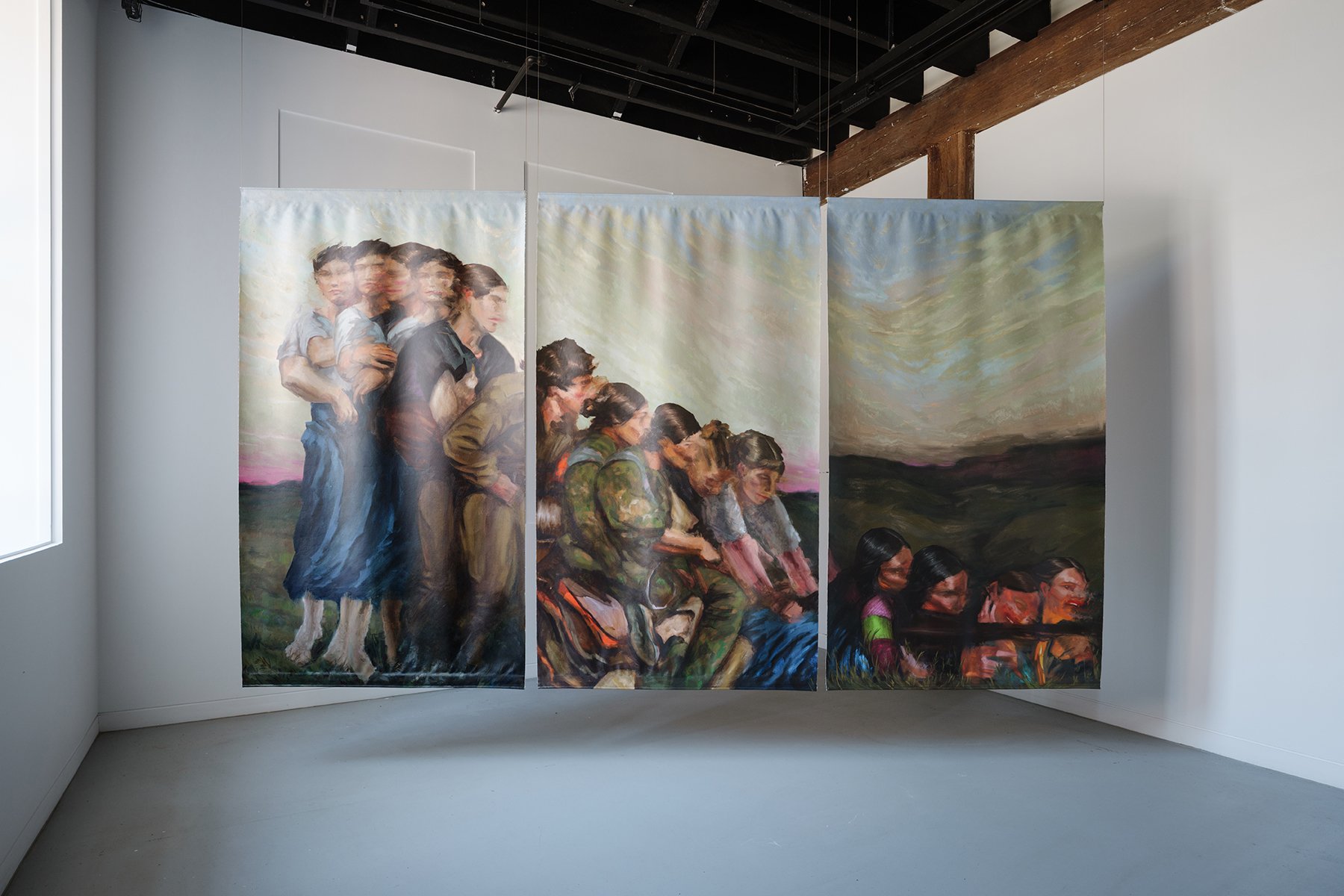
This exhibition presents Palestinians and the profound effect of their resistance as breathing presences of culture, memory, land, song and human experience. These works speak through broadly imposed silences and indifference, navigating the slipperiness of erasure with concrete gestures of care. Gauze stitched for wounds; clay pressed by many hands into small, shrouded figures; performance meeting physical memento; paint, canvas and paper layering histories into bodies that refuse disappearance. Here art insists on testimony, converting pain into ritual, absence into encounter, grief into a disciplined, communal tenderness. From intimate marks to public participation, each work summons attention to names, stories and futures. Here we can witness creative survival, where making exists despite censorship, neutrality and violence. It is in this reality that a collective kinship is found. Echoes of Resistance holds these fragile traces as proof that people persist, that art remembers, and that bearing witness is an evolving practice of love and accountability.
The Space
viewing techniques
Francis Anne Cameron
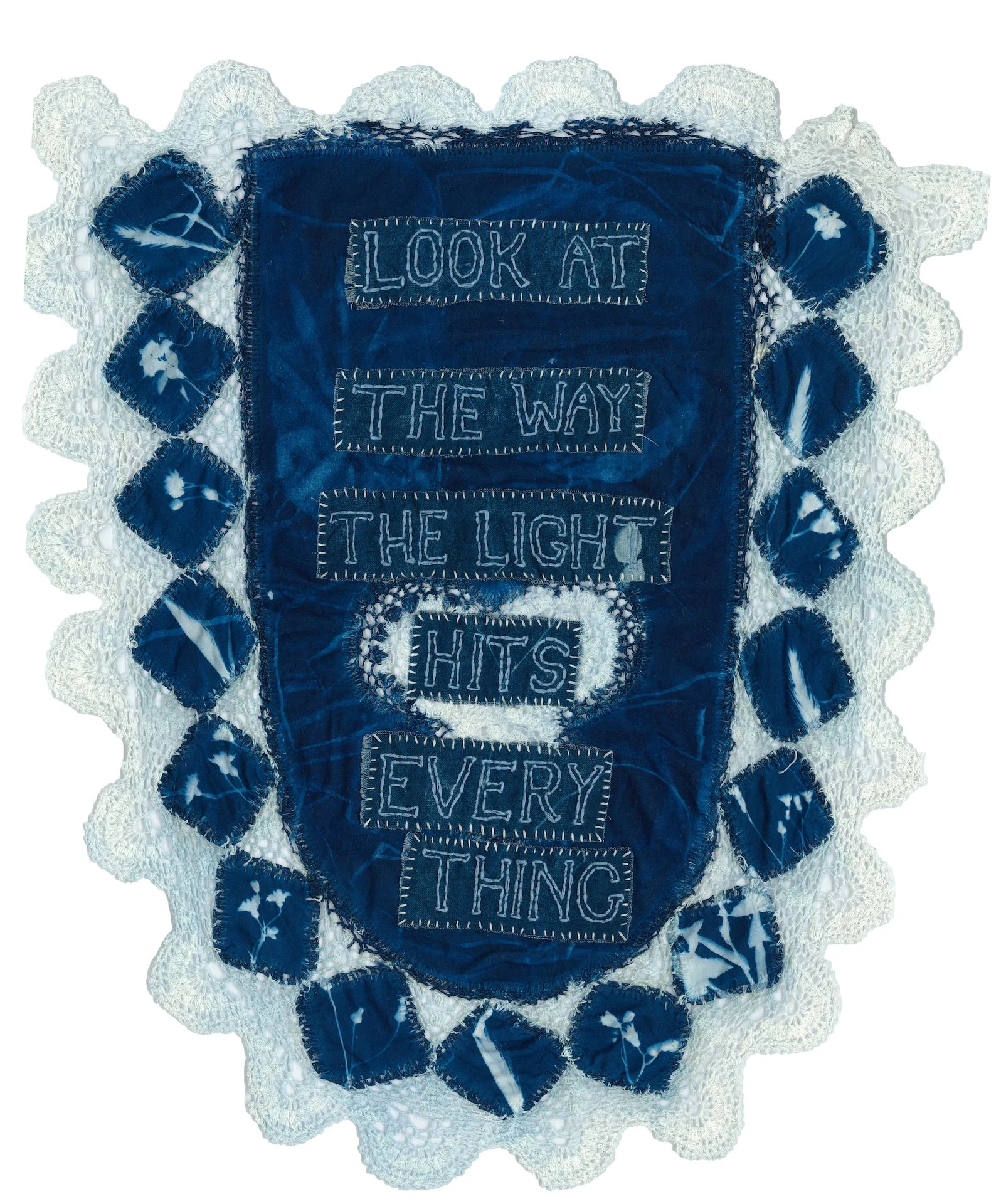
viewing techniques is an exhibition that explores the dynamic interaction between text, texture & textiles through cyanotype, embroidery and found surfaces. These works examine ideas such as faith, embodiment and the natural world.
I am interested in the way text can be utilised & embedded in artwork & the thresholds between art/craft, artist/poet, & self/nature. As a transgender & genderqueer artist I reject the femininity that is often ascribed to textile art but embrace the physicality of doing something with my hands.
You are encouraged to scavenge the words and phrases found within this exhibition for your own artwork or poetry.
Bio: Francis Anne Cameron is a textile artist, printmaker and experimenter living and working on the banks of kanamaluka, Lutruwita. Their work explores their experiences with gender, nature & their faith as a Quaker. They have a Bachelor of Creative Industries (Visual Arts) but are currently studying a Master degree in a completely different field at the University of Tasmania.
Image credits (From top to bottom)
Courtesy of the artist.
Photo by Lana Vella.
Marion Abraham, Collapse. Photograph by Hamish McIntosh, Artspace.
Courtesy of the artist.